
Table of Contents
You might notice more hair in the shower or see your part getting wider. These small changes often linger in your mind before you start searching for answers. Over time, that concern leads many people to explore real hair restoration options.
At Optimal Health Family Practice & Medspa, if PRP hair restoration has come up in that search, you deserve a straightforward answer about what it can actually do. This guide walks through what to realistically expect, not just a hopeful sales pitch.
What Results Can You Expect From Hair Restoration?
Some people see thicker hair or less shedding, especially if their thinning is mild and recent. Results vary from person to person. PRP is not meant to regrow hair in areas with major or long-term loss, and any improvement usually happens slowly over time.
What PRP Hair Restoration Actually Involves
PRP begins with a small blood draw, much like a regular lab test. The blood is processed to concentrate the platelets, which are then injected into your scalp. The goal is to support the hair follicles you already have, not to create new ones.
It is worth being upfront about something here. Using PRP specifically as a hair loss treatment is considered an off-label application, and the evidence base for this particular use continues to grow and evolve. That makes it a promising option worth exploring, as long as it comes with realistic expectations rather than promises of dramatic, overnight change.
What the PRP Treatment Process Looks Like
Understanding what happens during treatment can make the process feel less intimidating. Here is what a typical PRP session looks like:
- Blood is drawn from your arm, similar to a routine lab draw
- The blood is processed in a centrifuge to separate and concentrate the platelets
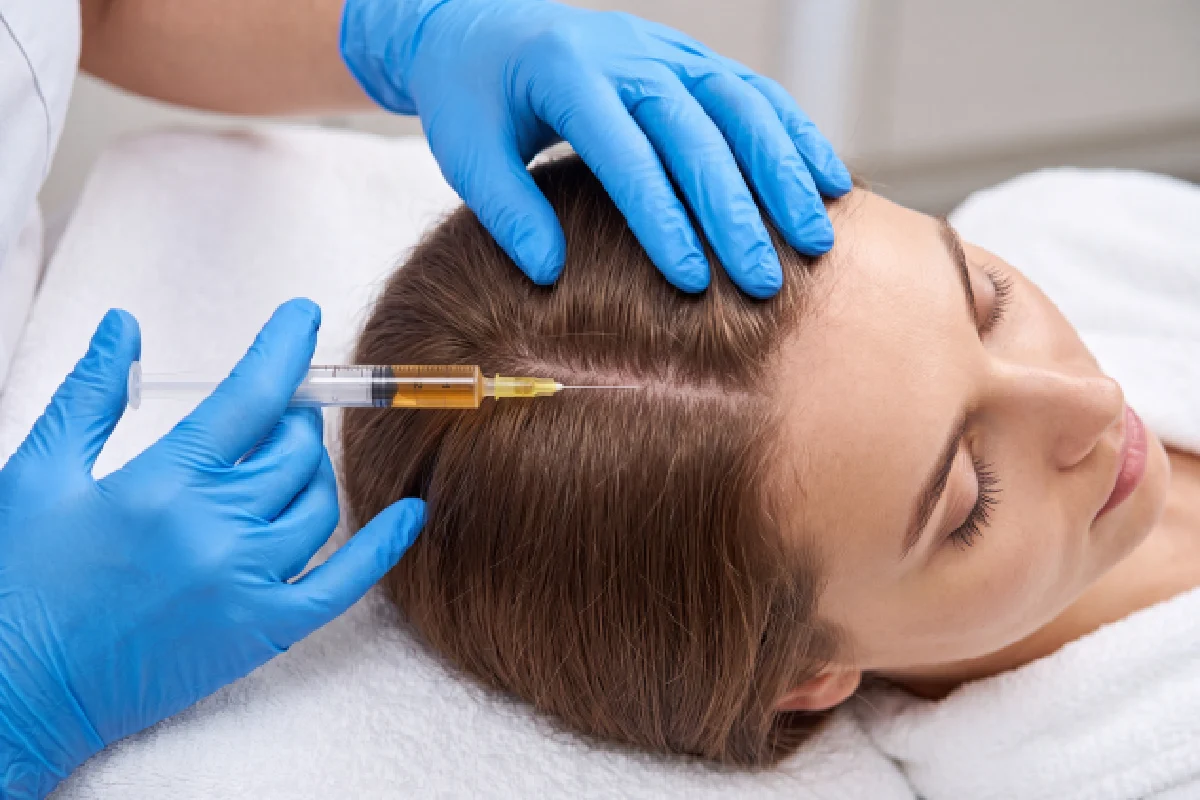
- The concentrated PRP is then injected into the areas of the scalp being treated, supporting and promoting scalp circulation for healthier hair growth
- Most sessions take under an hour from start to finish
This process is repeated over several sessions, usually spaced a few weeks apart. One visit is not enough to achieve the best results.
What Results Can You Realistically Expect
This is the main question, so here is a direct answer:
- Some patients notice improving hair density without surgery, along with a reduction in daily shedding
- This tends to be most common among those with early, mild thinning rather than more advanced hair loss
- Results are genuinely not uniform from one patient to the next
Some people notice a big difference, while others see only small changes. This range of results is normal and does not mean anything went wrong. PRP is not meant to restore hair in areas with major or long-term thinning.
Gender-Specific Benefits Worth Knowing
PRP is used for both men and women with hair thinning, but the pattern of hair loss and treatment goals can differ. Men often use PRP to address thinning at the crown or hairline, aiming to support existing hair before more is lost.
For women, thinning is often more diffuse across the scalp rather than concentrated in one area, and PRP, as a thinning hair treatment patients consider is sometimes paired with hormonal or postpartum-related hair changes. In both cases, the goal is the same: supporting the follicles still active rather than promising a universal result.
How Long It Takes to See Results
When changes do happen, they usually appear slowly over several months, not in the first few weeks. This is because hair follicles need time to move into an active growth phase, not because the treatment is slow to work.
It’s normal to need patience in the first few months. If you do not see a big change after four weeks, it does not mean the treatment is not working. It usually just means the process is still ongoing.
What Factors Influence Whether Results Are Noticeable
A few specific things tend to shape how much of a difference scalp PRP treatment makes for a given person:
- Stage and pattern of thinning: Reducing hair thinning tends to be more achievable when there are still active follicles in the area being treated
- General health and underlying cause: These play a real role in how someone responds to treatment
- Consistency with your treatment schedule: Skipping sessions or spacing them out more than recommended usually leads to less noticeable results than sticking to the plan.
How Long Results Last and Whether Maintenance Is Needed
PRP results are not always permanent. Many people find that regular maintenance sessions help keep their results. Usually, you start with a series of sessions, then have less frequent maintenance visits over time.
How much maintenance someone needs varies based on their individual response and how much thinning was present to begin with. This is part of why boosting hair follicle strength is often framed as an ongoing relationship with your scalp health, not a one-time fix.
Who Tends to See the Best Results
People with early-stage thinning usually get the best results because they have more active follicles for PRP to help. Those with more advanced or long-term hair loss may see less improvement, and it is important to know this up front.
A consultation gives you an answer specific to your own scalp and hair pattern, not a general statement from an article. Some patients also explore combining PRP with other non-surgical hair treatments, including microneedling or Morpheus8, which a provider can walk you through based on your evaluation.
FAQs
Is PRP hair restoration painful?
Most people feel only mild discomfort or a tingling feeling during the injections, not real pain. This usually goes away soon after the session ends.
How many sessions are typically needed to see results?
Most treatment plans include several sessions spaced a few weeks apart. The exact number depends on how much thinning you have and how your scalp responds.
Can PRP be combined with other hair restoration treatments?
Yes, some people combine PRP with treatments like microneedling or Morpheus8 as part of a bigger plan. A consultation can help you decide if this combination is right for your type of hair thinning.
Can PRP help slow down hair loss progression, even without dramatic regrowth?
For some patients, yes. Reducing hair loss progression is sometimes a realistic goal on its own, even when significant new growth isn’t the primary outcome, and this can still be a meaningful result for someone hoping to preserve the hair they currently have.
Ready for an Honest Conversation About Your Hair?
Hair thinning deserves more than a hopeful guess about what might work. At Optimal Health Family Practice & Medspa, we offer hair growth treatment in Provo, UT, built around your specific scalp and hair pattern, with realistic expectations set from the very first conversation. Contact us to talk through your options.
Book your hair restoration program when you are ready to get started.